Gambler Lures
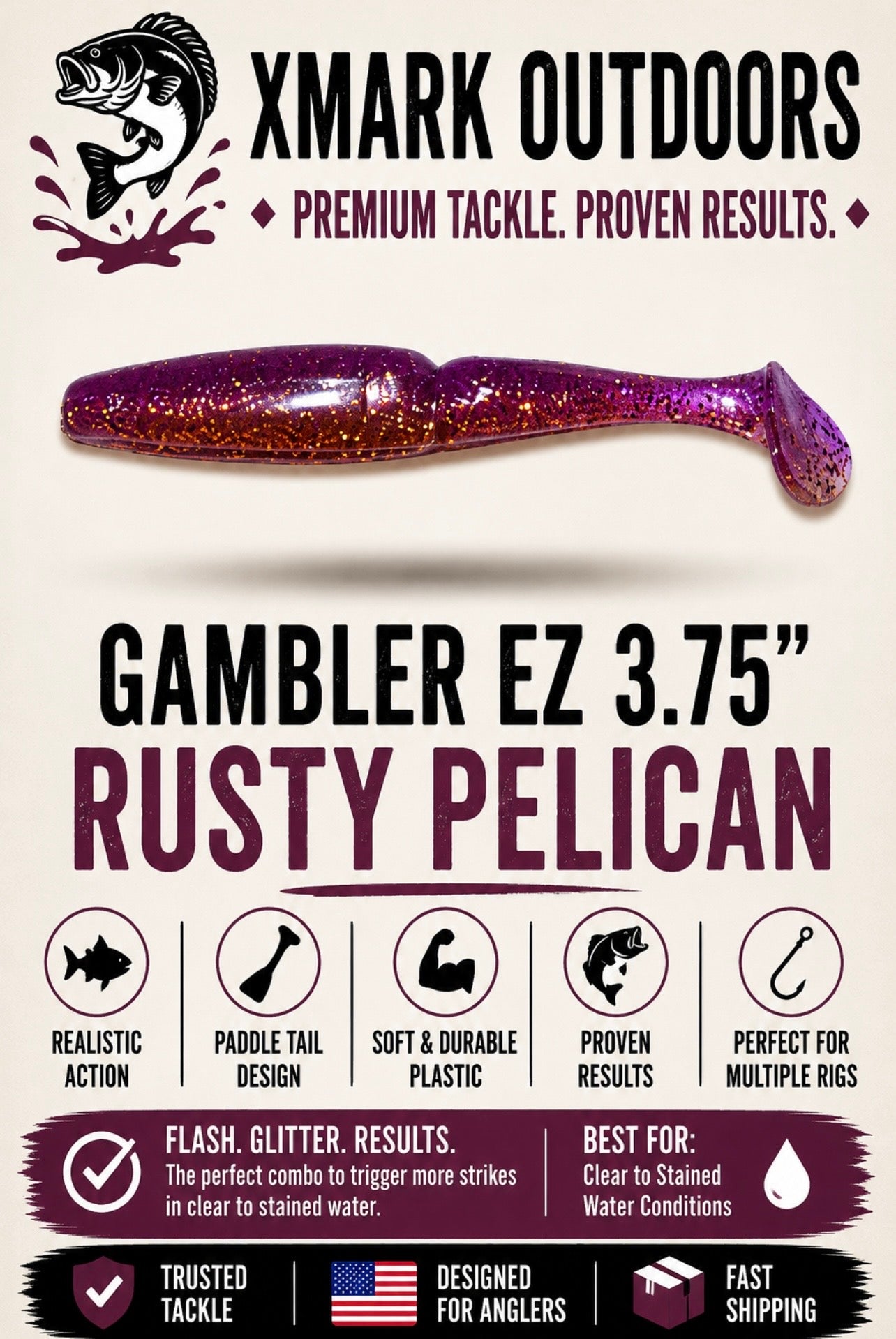
Gambler Little EZ 3.75-Inch Paddle Tail Swimbait – 9 Pack
Gambler Little EZ 3.75-Inch Paddle Tail Swimbait – 9 Pack
Couldn't load pickup availability
Product Overview
The Gambler Little EZ is a 3.75-inch soft-plastic paddle-tail swimbait with a compact baitfish profile. Its swimming action makes it a versatile choice for freshwater bass fishing, whether you want to swim a single bait through open water or add a paddle-tail trailer to a compatible jig. Each pack contains nine swimbaits.
In ponds, lakes, and reservoirs, a swimming bait lets you cover water while adjusting your presentation to the depth of baitfish and nearby cover. Fish the Little EZ along submerged grass edges, beside docks, or over open-water structure with a setup suited to the conditions. Its smaller profile is also an option when bass are feeding on smaller forage or responding cautiously to larger presentations.
Gambler identifies standalone fishing, swim jigs, ChatterBaits, and A-rigs as applications for the Little EZ. The practical setup and retrieve guidance below is Xmark Outdoors’ advice, not a statement of manufacturer-tested hook sizes or guaranteed results.
Key Features & Specifications
- Manufacturer: Gambler Lures
- Model: Little EZ
- Length: 3.75 inches
- Pack quantity: 9 swimbaits
- Lure type: Soft-plastic paddle-tail swimbait
- Color selection: 44 existing Xmark Outdoors color options; select a variant for current stock.
- Applications: Freshwater bass fishing, standalone swimming presentations, compatible swim-jig and bladed-jig trailers, and umbrella rigs.
Color names and inventory reflect Xmark Outdoors’ existing stock and may differ from Gambler’s current catalog. Hooks, jigheads, jigs, and rigs are separate pairing suggestions.
Xmark Outdoors — Suggested Rigging
Choose hardware that fits the bait without crowding the paddle tail or leaving insufficient hook clearance. Check the assembled bait in the water before fishing. No specific hook size or weight is universally correct for every presentation.
1. Swimbait Jighead
Enter the center of the nose with the hook point and thread the bait along the hook shank, bringing the point out through the center of the back. Seat the nose against the keeper without bunching the body. A straight body helps the lure swim rather than roll. Use a lighter head for shallow water and slower falls; increase weight when depth, wind, or current makes control difficult. In open water, count the bait down to the desired level and retrieve steadily. Adjust the countdown and speed to work above fish or structure rather than dragging through snags.
2. Belly-Weighted Swimbait Hook
With a compatible offset or screw-lock hook, secure the nose using the hook’s attachment method, measure where the point should exit, and pass it through the body so the bait rests straight. Lightly skin-hook the point if appropriate, leaving enough hook gap for the body to compress during a bite. This weedless-style presentation suits grass edges and scattered vegetation, though it is not snag-proof. Swim just above the grass with a steady retrieve, slowing beside openings and changing weight if the bait sinks too deeply into the cover.
3. Underspin
Thread the Little EZ straight onto a compatible underspin head, keeping the body and tail clear of the blade and swivel. The blade adds flash beneath the bait, making this an option around open-water baitfish, deeper edges, or lightly stained water. Let the rig reach the intended depth, then retrieve fast enough for the blade to rotate and the tail to work. If it tracks too high, allow more sink time or adjust weight rather than simply retrieving faster. Avoid vegetation thick enough to foul the blade.
4. Swim Jig Trailer
Thread the bait centrally onto a compatible swim jig and seat it firmly on the keeper. Confirm that the hook exits straight and the paddle tail extends beyond the skirt with room to move. Swim along vegetation edges and around scattered cover using a steady retrieve and occasional brief pauses where the rig can fall safely. Choose a jig weight that stays near the desired depth without burying in the grass. Check for fouled vegetation after contact.
5. Bladed Jig Trailer
Mount the bait straight on a compatible bladed jig, keeping it secure against the keeper and clear of the blade’s operation. Test the assembled rig beside the bank to confirm that it tracks correctly and starts vibrating at your chosen speed. This combination is an option for covering water beside grass and other scattered cover, particularly when some vibration helps define the presentation. Use a steady retrieve, varying speed or adding short pauses in open lanes. Keep it clear of dense brush and other snag-prone obstacles.
6. Alabama/Umbrella Rig
Use Little EZ baits on appropriately sized jigheads attached to a compatible umbrella rig. Thread each bait straight, inspect snaps and connections, and use tackle rated for the total rig weight. In open water, let the rig reach the desired level before retrieving steadily to suggest a small group of baitfish. Adjust sink time and speed to maintain depth, avoiding thick cover where multiple hooks can snag. Check local regulations for permitted hook counts and rig restrictions before use.
Fishing Techniques & Tips
- Slow rolling: Retrieve slowly enough to stay near the chosen depth while maintaining tail movement. Test the action nearby and adjust weight if the bait sinks into the bottom or grass.
- Steady swimming: Start with a consistent retrieve, then vary speed or add short pauses if fish follow without committing.
- Depth control: Combine jighead weight, sink time, rod position, and retrieve speed. Repeat productive countdowns rather than assuming a fixed number of seconds equals a specific depth.
- Submerged grass: Work above the tops or along outside edges. Use a weedless-style hook where exposed hooks repeatedly collect vegetation.
- Docks: Cast beside pilings and along shade edges while keeping control of the line. Choose exposed or weedless-style hardware according to snag risk.
- Baitfish imitation: Match the approximate size and appearance of local forage, then adjust swimming depth to where baitfish are holding.
- Clear versus stained water: Natural or translucent patterns are useful starting points in clear water; greater contrast or an underspin’s flash may help in reduced visibility. Let actual fish response guide the choice.
- Seasonal applications: Follow the location of forage and bass rather than relying on a calendar alone. Explore shallow cover when fish move up, deeper edges when they hold offshore, and slower presentations when fish are less active.
- Pressured fish: Try a quieter approach, longer casts where practical, a slower steady retrieve, or less added flash. Change one variable at a time so you can identify what helps.
Recommended Rigging & Pairings
Choose a swimbait jighead for exposed-hook open-water fishing, a belly-weighted swimbait hook for grass edges, an underspin for added flash, or a compatible swim jig for a skirted presentation around vegetation. Check hook gap, keeper fit, and tail clearance before selecting any accessory. These are accessory categories, not verified compatibility claims for a particular product.
Why Buy From Xmark Outdoors?
Xmark Outdoors combines a focused fishing-tackle selection with practical guidance to help you choose a presentation and use it with confidence. Our Fishing Academy resources support that learning with technique explanations and on-the-water tips, connecting the tackle you buy with the situations you fish.
Share